At the sharp end of technical accounting - Esther Pieterse CA(SA)
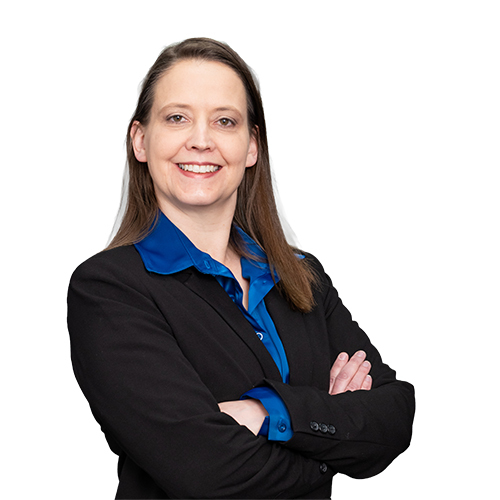
Rigorously disciplined and drawn to challenge, Esther Pieterse has built a reputation for staying the course on complex issues until she gets to the right answer.
As director of KPMG’s Department of Professional Practice, she supports teams on the interpretation and application of IFRS Accounting Standards. Focusing on clients and audit teams in the insurance industry, part of her role is reviewing financial statements and helping teams reach sound technical conclusions.
She’s one of the experts the profession turns to when technical issues are particularly demanding. ‘To find the solution I will not leave any stone unturned,’ she says. ‘Technical accounting at this level is about working through complexity until you reach a sound, defensible conclusion.’
For younger CAs(SA) and trainees interested in the technical route, her advice is to read the accounting standards, stay up to date and explore what genuinely holds your attention. If a question for example about IFRS 16 piques your interest, she says, that tells you something. Pieterse also believes in trying things out early in your career instead of worrying about the time it may takes. Stay in audit while you are still learning, then explore. Try different roles, different teams, even different organisations. In her view, you usually find your path in the work you keep being drawn back to.
Building authority requires a strong grasp of the industry, the business context and the people affected by the outcome. Through her work on committees and in global forums, Pieterse has developed a strong sense of which questions matter most. That is a core part of senior technical work.
Interpreting complexity is part of the job. Pieterse says she sees herself as an interpreter because IFRS is something businesses must comply with, and that means explaining why a transaction must be accounted for in a particular manner and what it means in practice. The job is not done once the technical answer is provided. The ability to make complexity clear is what sets strong technical advisers apart.
‘Part of my role when chairing a committee is to make sure technical discussions are open enough for people to raise concerns and express their views,’ she says. ‘But they also need direction. My job is to keep people focused so the group can reach a sound conclusion.’
Pieterse has spent a big part of her career in key technical structures across the profession. She’s the deputy chairperson of the Medical Schemes Project Group and deputy joint chairperson of the Insurance Project Group and is also part of the Investment Management Project Group. She chaired the IFRS 17 Working Group, a subcommittee of the Insurance Project Group, and has been a member of the Accounting Practices Committee since 2025.
‘The rigorous approach followed by SAICA, when commenting on exposure drafts to IFRS Accounting Standards, gives South African professionals real credibility in global reporting debates,’ she says. ‘It means we are not simply responding to global standards after they have been issued. We are in a position to influence the discussion. There is also growing integration across African practices, and that creates an opportunity to bring a broader African perspective into those debates, which is both necessary and valuable.’
Pieterse’s contribution to the profession includes comment letters to the International Accounting Standards Board on IFRS 17 exposure drafts, SAICA webinars for the medical schemes and insurance
sectors, IFRS 17 panels and stakeholder engagements, and leadership of the annual Medical Schemes Accounting Guide.
That work gives her a close view of the pressure points facing insurers, medical schemes and finance teams. IFRS 17 remains a challenge, especially where management only engage with the accounting standard periodically and attempt to overlay it on existing practices instead of embedding it in the reporting system. ‘Old habits may persist if the discipline needed for IFRS 17 is still not fully in place,’ she says.
‘Technical accounting is ever changing. For example, IFRS 18 is on its way which brings new requirements for the presentation of financial statements. That’s the nature of technical accounting. One implementation cycle ends while the next has already begun.’
Too often, she says, accounting is only considered after the tax and legal issues have been dealt with. The accounting answer is then often not what people expected to see in the financial statements. Accounting should be factored in earlier, alongside tax and legal, not at the end.
‘When a new standard is issued, the process of implementation should start with a proper gap analysis. Work out where the gaps are, how much work is involved and how demanding the project will be. In managing the implementation of the project, progress milestones should be put in place by working backwards from the deadline. It sounds straightforward, but that is often where implementation succeeds or fails.’
There is also another side to Pieterse’s discipline and love of challenge. Outside work, she is a competitive ballroom dancer. She took it up just after finishing her articles and now competes at a senior level, with lessons twice a week and extra practice when competitions are coming up.
The connection between her work and her dancing is not as unlikely as it sounds. Both demand precision, discipline and a strong feel for structure, but also the judgement to adapt without losing control.
‘Believe it or not, ballroom dancing has a surprisingly technical foundation, including posture, frame, footwork, timing and lead-follow mechanics. That’s what makes the artistry possible.’