How to become a Chartered Accountant CA(SA)
Becoming a chartered accountant CA(SA) is your gateway to a challenging and exciting career, global mobility, flexibility, and good earning potential in the business field of your choice.
The CA(SA) roadmap
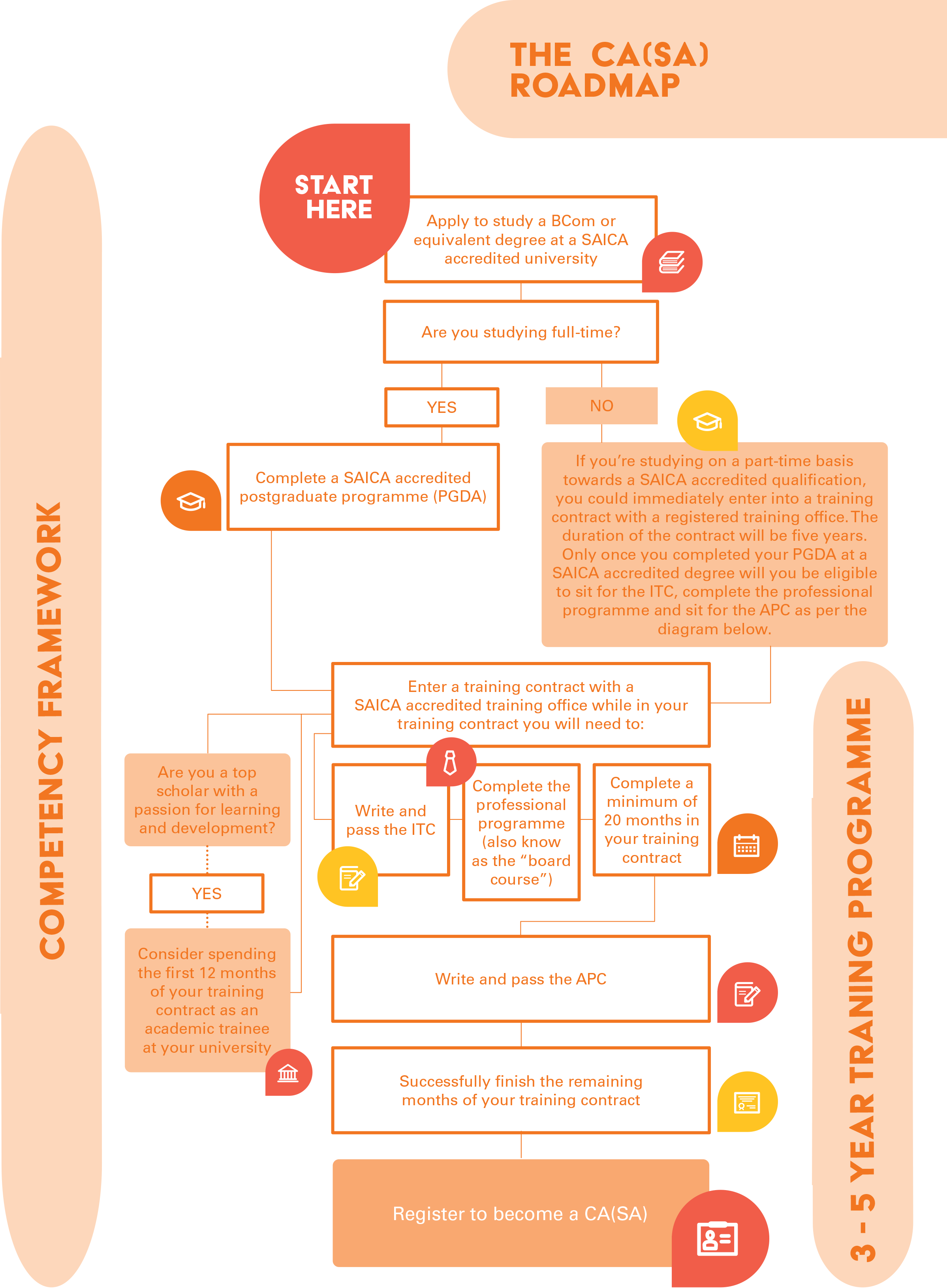
- CA of the Future: The CA of the Future is defined as a responsible leader who behaves ethically, creates sustainable value, and uses integrated thinking to make impactful decisions that contribute meaningfully to society
The Journey: The 5 core components of the qualification process
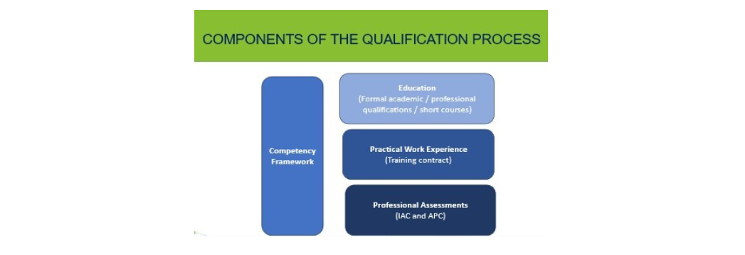
- The Academic programme: This is made up of underlying formal undergraduate degree and postgraduate qualifications registered on the NQF at levels 7 and 8 respectively via the HEQSF. These are delivered by academic programme providers and endorsed by SAICA;
- Professional Assessment 1: The Initial Assessment of Competence (IAC). This can only be completed once a prospective CA(SA) has successfully completed the SAICA-Endorsed PGDA (relevant SAICA-endorsed NQF level 8 qualification). The IAC set and administered by SAICA.
- The Training programme: This is a formal period of workplace experience and is a registered learnership through FASSET with the Department of Higher Education and Training. This is provided by SAICA accredited training offices
- The Professional Programme: While this is not required to be a formal qualification registered with SAQA, this programme still needs to be endorsed by SAICA and is one of the requirements to be eligible to enter the APC.
- Professional Assessment 2: The Assessment of Professional Competence (APC). This can only be completed once a prospective CA(SA) has completed the SAICA IAC; completed the SAICA endorsed professional programme and completed at least 20 months of the SAICA training programme. The APC set and administered by SAICA.
Individuals are only eligible to apply to SAICA to become a CA(SA) member (and use the CA(SA) designation), once all components above have been completed.